
Indian Festivals

christmas
Indian Festivals

Christmas – Festival of Joy and Peace

Christmas is a widely celebrated festival that commemorates the birth of Jesus Christ, symbolizing love, hope, and compassion. Observed on 25th December, the festival holds deep religious significance for Christians while also being embraced by people of different communities as a time of joy and togetherness. The celebrations begin with special prayers and midnight masses in churches, accompanied by the singing of traditional carols that spread messages of peace and goodwill. Churches, homes, and public spaces are beautifully decorated with lights, Christmas trees, stars, and nativity scenes. Families come together to share festive meals, exchange gifts, and spend quality time with loved ones. Christmas promotes values of kindness, forgiveness, and generosity, encouraging people to help those in need and spread happiness. The warm and joyful atmosphere of the festival strengthens bonds among families and communities, making Christmas a celebration of peace, unity, and love.
eid ul fitr
Indian Festivals

Eid-ul-Fitr – Festival of Faith and Sharing

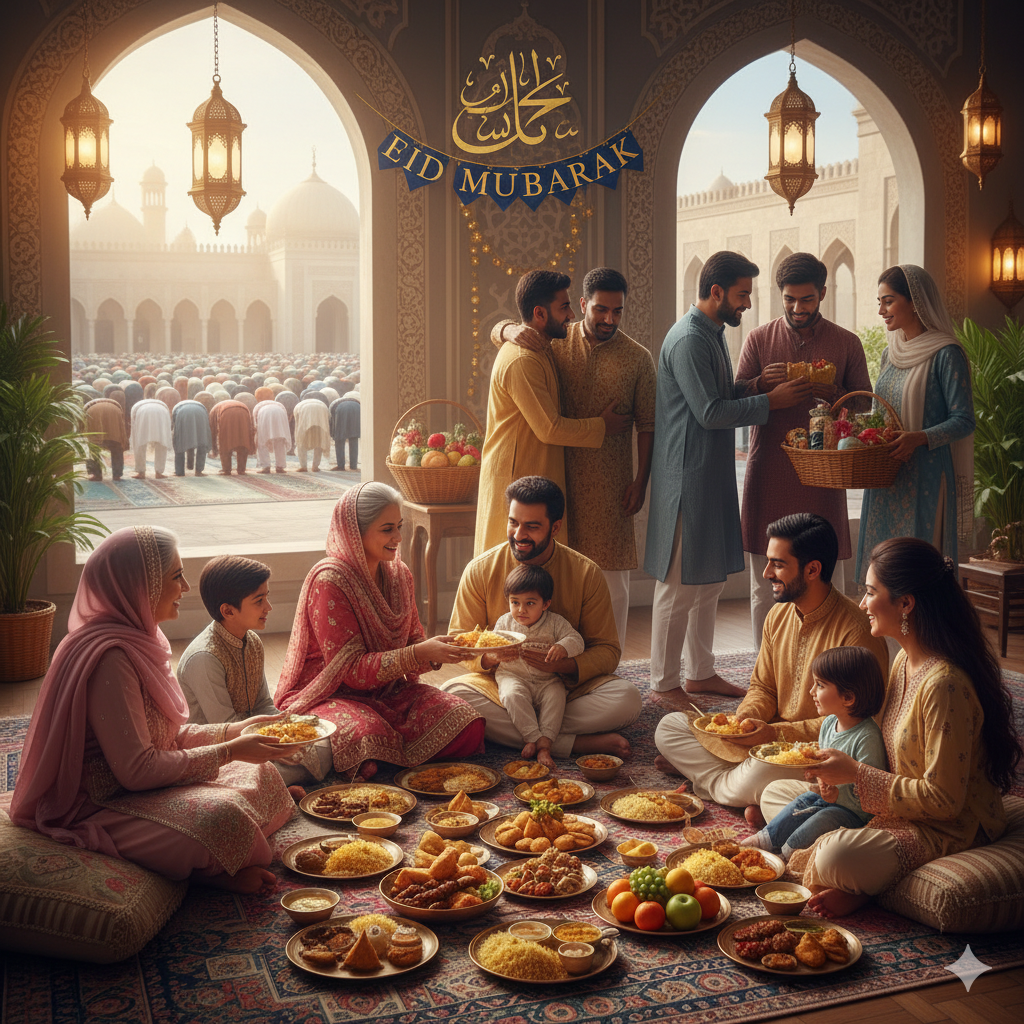
Eid-ul-Fitr is a significant and joyous festival that marks the conclusion of Ramadan, the holy month of fasting, prayer, and spiritual reflection observed by Muslims around the world. Ramadan is a period of self-discipline, devotion, and charity, and Eid-ul-Fitr celebrates the successful completion of this sacred month with gratitude and happiness. The day of Eid begins with special congregational prayers held at mosques or open prayer grounds, where people gather to offer thanks and seek blessings. Before the prayers, acts of charity, known as Zakat al-Fitr, are performed to ensure that everyone, including the less fortunate, can take part in the celebrations. Families then come together to share festive meals, exchange greetings, and visit relatives and friends. Eid-ul-Fitr emphasizes values of compassion, unity, generosity, and forgiveness. It strengthens social bonds and encourages harmony within communities, making it a celebration not only of faith but also of togetherness, kindness, and shared joy.

makar sankranti
Indian Festivals

Makar Sankranti – Harvest and Kite Festival

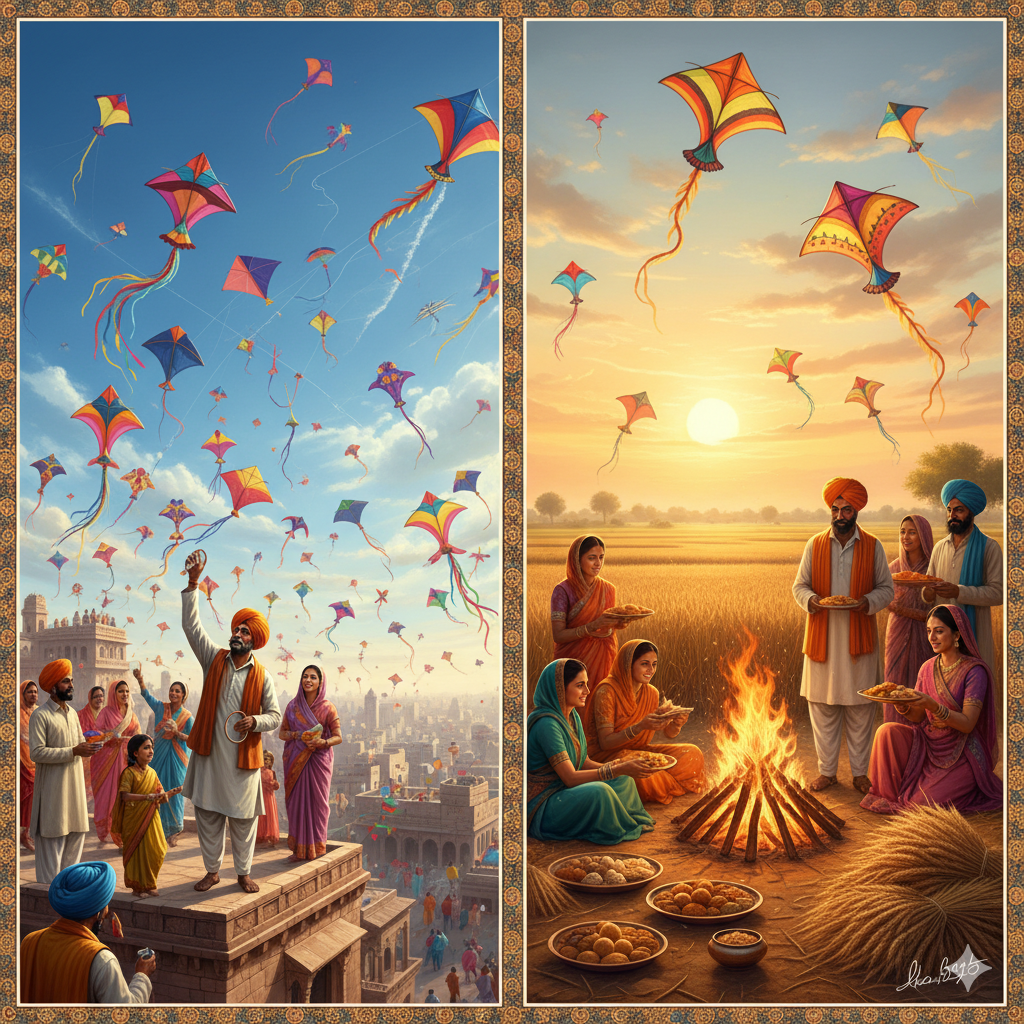
Makar Sankranti is an important harvest festival that celebrates the transition of the sun into the zodiac sign Capricorn (Makara), marking the end of winter and the beginning of longer, warmer days. This astronomical event is considered highly auspicious and is observed across India as a symbol of renewal, positivity, and seasonal change. The festival is celebrated in different ways across regions, but common traditions include kite flying, community gatherings, and the preparation of special festive foods. In many parts of the country, sweets made from sesame seeds and jaggery are shared, symbolizing warmth, togetherness, and goodwill. Farmers express gratitude for a successful harvest and pray for prosperity in the coming agricultural season. Makar Sankranti reflects deep respect for nature, the sun, and farming communities, acknowledging their role in sustaining life. The festival promotes harmony, gratitude, and hope, bringing people together to celebrate abundance, hard work, and the promise of a prosperous future.

dusheera
Indian Festivals

Navratri & Dussehra – Celebration of Divine Power

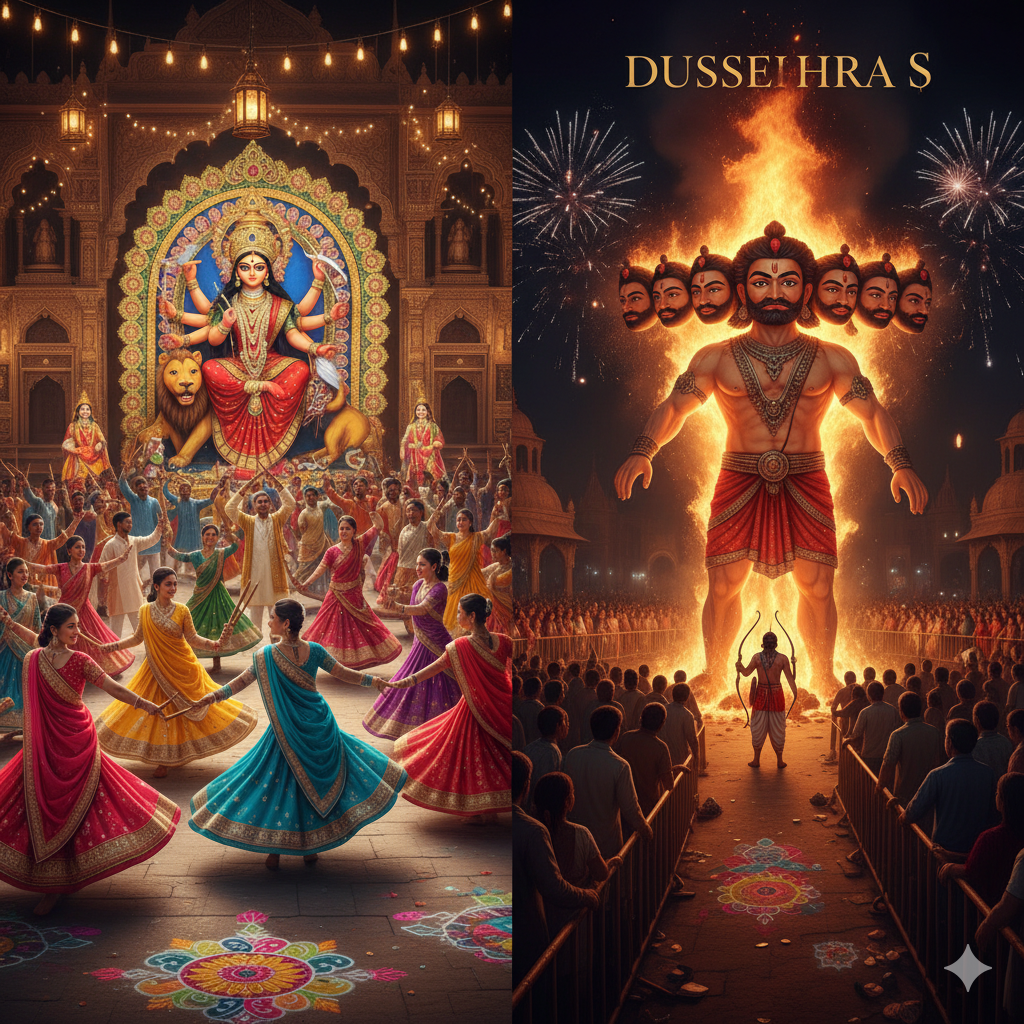
Navratri is a nine-day festival dedicated to Goddess Durga, celebrating her various forms that represent strength, protection, and divine energy. Throughout these nine days, devotees observe fasting, offer special prayers, and visit temples to seek blessings for health, prosperity, and inner strength. Each day of Navratri holds spiritual significance, symbolizing the victory of good forces over negative energies. Alongside religious observances, Navratri is also a vibrant cultural festival, especially in western India. Evenings come alive with garba and dandiya dances, where people dressed in colorful traditional attire gather in community spaces to celebrate with music, rhythm, and joy. These dances foster unity and reflect the rich folk traditions of India. Dussehra, celebrated on the tenth day, marks the victory of Lord Rama over Ravana, symbolizing the triumph of righteousness over evil. Effigies of Ravana are burned, representing the destruction of negativity and injustice. Together, Navratri and Dussehra highlight values of devotion, courage, discipline, and moral strength, inspiring individuals to uphold truth and righteousness in their lives.

diwali
Indian Festivals

Diwali – Festival of Lights

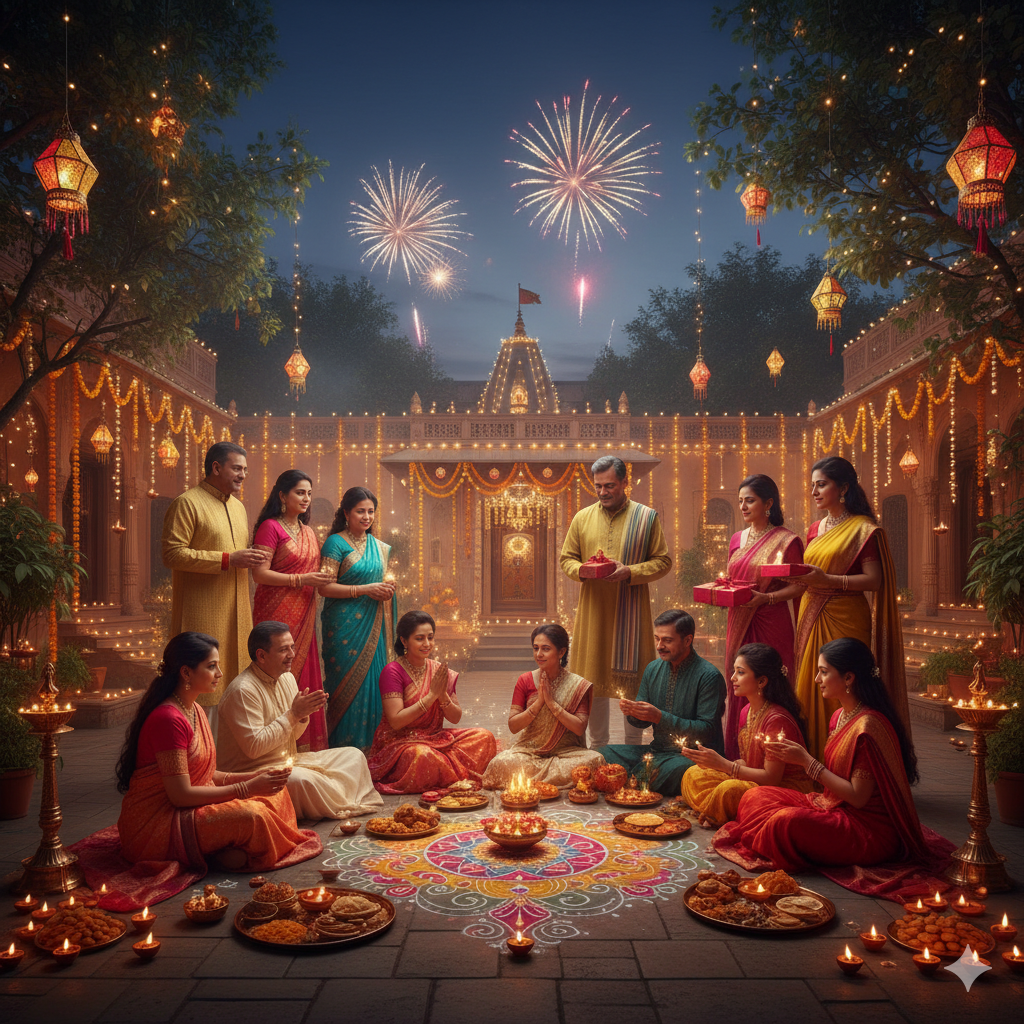
Diwali, also known as the Festival of Lights, is one of the most widely celebrated and significant festivals in India. It symbolizes the victory of light over darkness, good over evil, and knowledge over ignorance, marking an occasion of spiritual renewal and hope. The festival is celebrated with great enthusiasm across the country, bringing together people from different regions, cultures, and communities. During Diwali, homes, streets, temples, and public spaces are beautifully illuminated with rows of oil lamps (diyas), decorative lights, and colorful lanterns. Houses are cleaned and decorated with rangoli designs, flowers, and lights to welcome positivity and prosperity. Families come together to perform Lakshmi Puja, offering prayers for wealth, health, and success. Sharing sweets, exchanging gifts, and visiting relatives and friends are an important part of Diwali celebrations. Markets remain lively with festive shopping, and the atmosphere is filled with joy and togetherness. Fireworks, cultural events, and festive meals add to the excitement. Diwali represents new beginnings, gratitude, and unity, making it a festival that strengthens family bonds and spreads happiness throughout society.

Listings
News
Home
Jobs
Contact